by Cathleen Williams
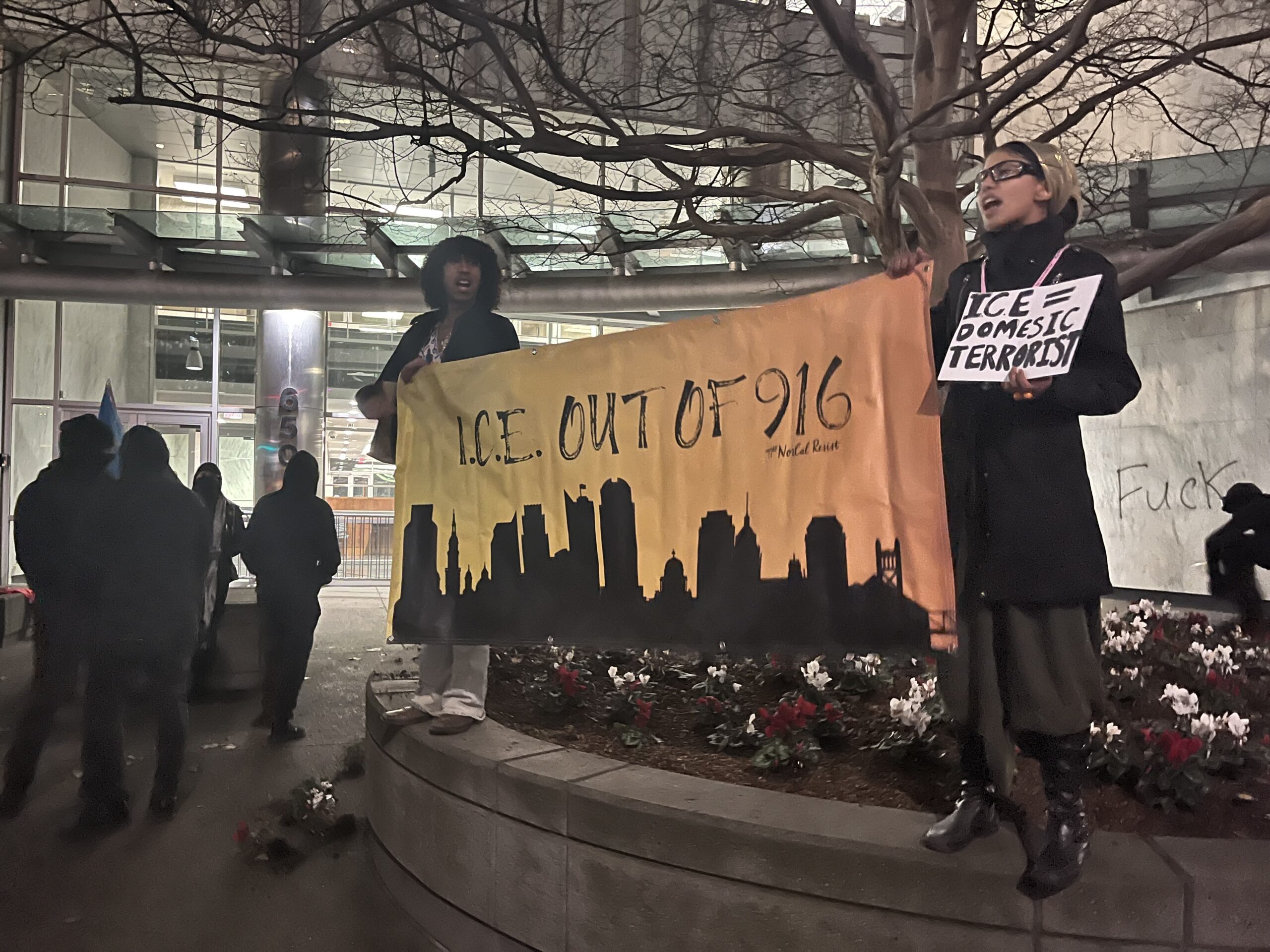
Since December 31, 2025, ICE agents have killed three U.S. citizens: Renee Nicole Good and Alex Pretti in Minneapolis, and Keith Porter Jr. in Los Angeles.
On February 3, 2026, Renee Nicole Good’s two brothers, Luke and Brent Ganger, testified before Congress. “What a beautiful American we have lost,” Luke Granger said in his opening remarks. Reflecting on his sister’s being and essence, he described her as a dandelion in sunlight. Optimistic. Growing without permission. Brent Ganger summed up the meaning of these losses: It is “the small everyday deeds” of ordinary people like Renee Nicole Good, and Alex Pretti, that “keep the darkness at bay.”
What is that darkness? As described by journalist Caitlin Dickerson,
“I really think that we’re looking at a reality, with this more than $170 billion for immigration enforcement, that involves armed law enforcement in the streets as a regular fixture of our lives. Chaotic conflicts in the streets are something that we’re going to become accustomed to and massive detention centers that are going to come up and are going to be built for the purposes of holding people and then getting them out of the country.”
Immigration Laws – Who Wrote Them and Why?
U.S. immigration legislation is essentially written by the corporations themselves, following the ugly grooves carved in our society by white supremacy. Today, we face the reality that governments are making it more difficult to migrate. Automation, robotics, AI: These technologies are reducing the need for human labor, and at the same time a global class of people is struggling with permanent unemployment, displacement, and the climate crisis, all resulting from the rapidly consolidating worldwide system of corporate control that transcends boundaries and borders. Migration is the age-old human response to catastrophe.
Nationally, the corporate goal of immigration policy is to keep labor cheap and vulnerable, while reaping the huge profits promised by criminalization of the workforce. This goal also drives the “guest worker” program for importing seasonal workers. The Southern Poverty Law Center has described guest worker programs as “close to slavery.”
Like they did with the notorious Bracero program for migrant workers in the agricultural and railroad industries in the 1950s, corporations threaten workers with deportation if they lose their jobs, and at the same time they render labor laws unenforceable. The guest worker program has just been vastly expanded by the Trump regime.
Recently, the officers of the UE electrical workers union affirmed the function of immigration policy in a ringing denunciation of ICE:
“All working people have a stake in standing up for immigrant workers’ rights. As our union and the rest of the labor movement have learned over the past half-century, the real purpose of immigration enforcement is to maintain a permanent underclass of workers afraid to stand up for their rights — which drags down wages and working conditions for all workers.”
Although U.S. immigration policy has always been about control of labor, its racist political justifications have continually evolved. The label “illegal” started to be imposed in the 1960s to demonize and criminalize undocumented people, parallel to the way the “super-predator” was in the 1990s to justify the broad repression, the mass incarceration, and the police profiling of the African American community.
But the ultimate goal of the attack on immigrants is political control of the country itself. According to Nick Estes, a historian at the University of Minnesota and enrolled member of the Lower Brule Sioux Tribe, the shooting and killing of white people on the streets of Minneapolis is “a war on solidarity.”
“White supremacy is meant to control white people first and foremost,” he said. “So if they’re not complying with the status quo, and they’re trying to defend immigrant neighbors, I see this as retaliation [against them for that].”
The Developing Resistance
What shines in the darkness is the scope of the new civil rights movement that is coalescing around opposition to the campaign for mass deportations, the uprooting of communities, the attack on neighbors. The imperative “Abolish ICE” is no longer radical. Key elements in building this movement are the networks – based in neighborhoods and organizations – that have mobilized uncounted thousands in Minneapolis and across the country. In that embattled city, opposition has cohered into a highly effective, self-organized, and well-maintained communication system, using the most advanced electronic means to coordinate local action.
Nationwide, the progressive organization Indivisible has sent out a call for a third “No Kings” action on March 28, outlining goals, strategy, and tactics. The goal is to stop the fascist regime from consolidating its grip on power; the strategy is to organize overwhelming nonviolent people power and foster a culture of mass defiance; the tactic – one among many, as the activist organization wrote— is to open an “entry point” for millions to get involved in the struggle, “from ICE watch, to mutual aid, to electoral work.”
The “Eyes On ICE” virtual training that the No Kings Coalition sponsored in January brought 200,000 people together days after ICE killed Alex Pretti. “Know your rights” trainings have been effective in getting people involved across the country. In Minneapolis, the community organization Unidos trained an astounding 30,000 people in response to ICE’s surge.
The crisis is here. Find your place in local and national movements!
A third “No Kings” rally is scheduled in San Francisco on Saturday, March 28. An earlier version of this piece was originally published in People’s Tribune.