
Waiting months until after the election, the city released details on their homeless January 2026 Point-in-Time (PIT) Count on Thursday November 5, 2026. While overall numbers are down, due mainly to revenue from the 2018 Our City, Our Home initiative, there are some red flags in the numbers that demonstrate the Mayor’s initiatives may be failing. The homelessness department, known as HSH, reported that, “persons who were identified as chronically homelessness increased by 17% between 2024 and 2026.” The findings also included a 15% increase in family homelessness, a 14% increase in persons with a serious mental illness. However children saw an increase of children under the age of 18 experiencing homelessness by 27% alongside a 9% increase in senior homelessness. Lastly, the results outline a big decrease in street homelessness equivalent to the number of shelter beds added (15%) but it also finds a 37% increase in people homeless for the first time. This indicates that the next count will see an increase in homelessness on the street—as shelter beds fill and prevention and housing efforts fall flat with underfunding. An increase in chronic homelessness from 2024 and previous increase from 2022, indicate a major crisis if we don’t act.
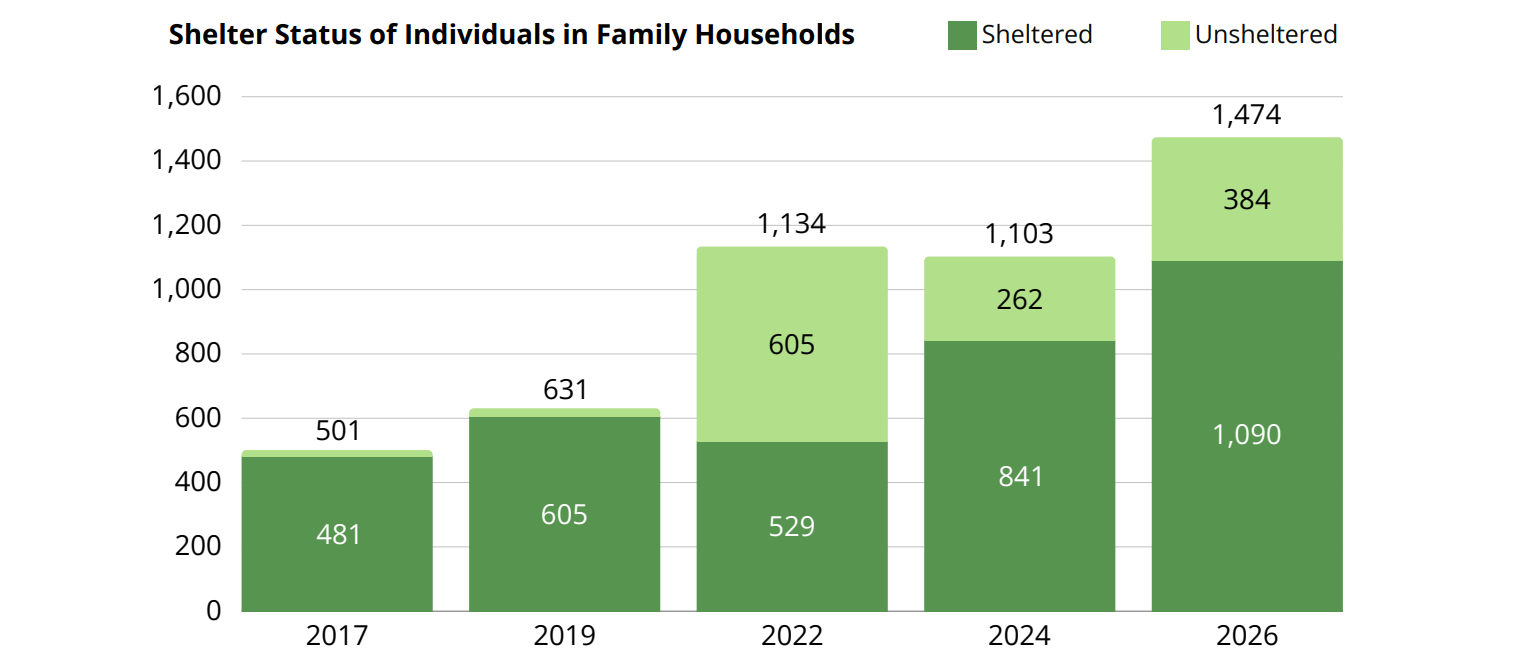
Daniel Lurie’s administration’s homeless policy has focused on two main areas of work—the mayor’s “Breaking the Cycle,” initiative, focusing on addressing substance use disorders and an intensive street response that centers enforcement, arrest and detention. At the same time, the administration has deemphasized housing, by opposing Prop. C and moving away from the widely successful Housing First approach. The Coalition on Homelessness’s outreach workers have noted that these measures have amounted to directly pushing homeless people away from services they desperately need as they face sky rocketing rents and evictions. The number of people experiencing chronic homelessness, substance use disorders and mental illness all rising indicates this approach is not working.
By failing to go upstream and ensure youth and children have permanent housing, we are creating more generations of homelessness, as this PIT count found about half our homeless population became homeless before age 25. The findings are a testament to the tried and failed approaches enacted by this administration, that employs criminalization and short term solutions to a humanitarian crisis. The City reports a 22% decrease in unsheltered homelessness that could be partially attributed to the increase of homeless people in jails and hospitals, as well as the increase in shelter beds. However, nationally, municipalities who overinvest in shelters see a first-year decrease in street homelessness, only to find a ballooning of the population the following year.
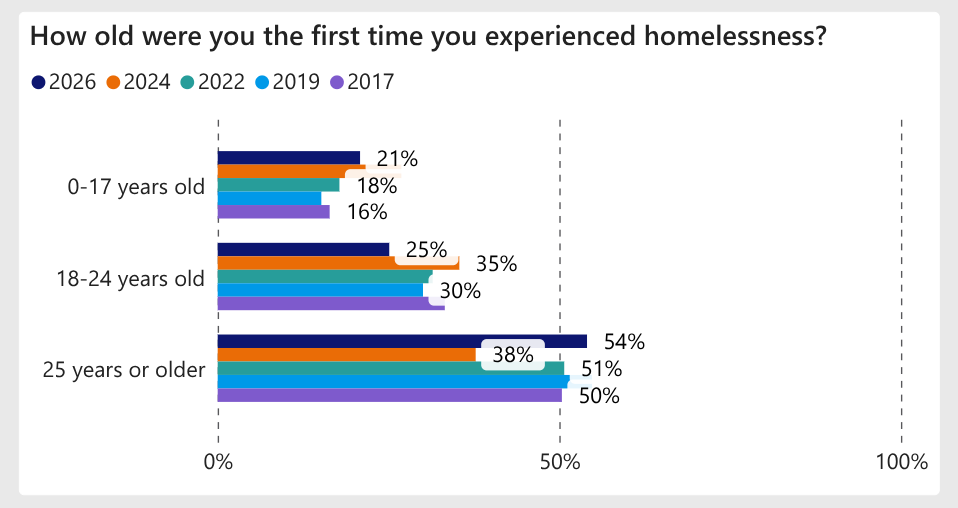
These findings are not prescriptive of a local government leading with evidence-based and care-based solutions, but one that attempts to eliminate visible poverty through sweeps and arrests and fails to provide permanent pathways to housing for children, families, people with mental illnesses and seniors.
The Coalition on Homelessness urges the City to work alongside homeless providers, housing experts, mental health professionals and homeless families, seniors, and those with mental illnesses to ensure they are given dignified housing and no longer left behind.