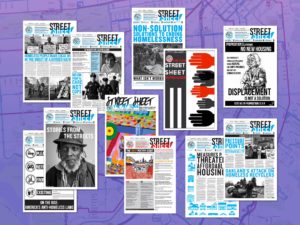
Modern homelessness has unfolded in two chapters in the United States. The first chapter was of course the Great Depression, a period of displacement and poverty that was corrected for by a mass investment in housing and the passage of the Housing Act of 1949that guaranteed decent housing for impoverished people. The second chapter opened in 1983, when Ronald Reagan eliminated 76% of the federal housing budget and abandoned the commitment made by that same Housing Act.
There was no correction to this second chapter. The federal disinvestment in housing over the past 45 years have driven homeless rates steadily up as rents have risen. Subjected to years and years of on the streets, the health of homeless people deteriorated, and the trauma of homelessness itself drove addiction and mental illness rates up. Local municipalities turned to police in unsuccessful attempts to manage the street crisis, wasting millions that could be spent in housing.
In the course of 2024 alone over 1.4 million households in the United States experienced homelessness.
So what about San Francisco? Sadly—here in our own city—many of those same bad decisions are being replicated. San Francisco did a number of things that have contributed to homelessness here. In the 1950’s, the city started to raze the Fillmore, eventually tearing down 2,500 Victorians primarily occupied by African Americans and closing 800 Black-owned businesses under the guise of urban renewal. The City also tore down hundreds of SRO units to make way for the Moscone Center.
While redlining became illegal in 1968, its legacy meant many African Americans could not accumulate wealth. Today landlords continue to discriminate and African Americans face higher rates of eviction.
In 1980 our once flourishing mental health system was devastated with changes made to disability insurance, and the realignment and loss of Board and Care facilities. Today we have lost about 4,000 of the Board and Care beds once offered. Public housing was rebuilt in the 90s under HOPE VI but 120 units were lost, and many of the tenants were unable to move back in.
All of this contributed to not only driving the African American population down, but driving many Black San Franciscans into homelessness. While they make up 3.5% of the city’s population, African Americans are five times more likely to experience homelessness.
Today we are seeing modern day attempts to redline once again in examples like the SoMa West Neighborhood Association suing to ban both renting to Section 8 tenants and the creation of additional permanent supportive housing units. We are also seeing cuts similar to the recession of 2012, where we lost half of our drop-ins and two-thirds of our shelter beds, along with $40 million in cuts to behavioral health direct services.
At the start of the Lurie Administration we had 1,019 semi- and non-congregate shelter beds for single adults—beds that serve folks who don’t do well in congregate settings. Even when you account for beds being added, out of 1,019 beds only 527 will be remaining next year.
The local context of what homeless people are facing is right in line with the threats the federal government is putting forward. The Trump Administration has been attacking evidence-based practices like harm reduction and Housing First. The 920 Emergency housing voucher households in SF were notified their subsidy will be ending in October. Congress added funding to cover only a third of them or so. Meanwhile, HUD McKinney is expected to cut about $25 million in existing PSH housing operations.
Adding salt to our collective wounds, Lurie is planning on decommissioning about four PSH sites. Meanwhile about 12,000 unhoused households wait for housing in Coordinated Entry.
Here in SF we got tired of waiting for them to do the right thing and took this on ourselves, writing and passing a voter initiative called Our City Our Home, November 2018 Proposition C. It has been wildly successful – far surpassing what we promised to voters. But there have been hiccups.
The measure was held up in court for two years. Then a worldwide pandemic hit. Revenue fell but now it is back up and creates opportunity once again. Despite all that, we far surpassed promises to voters.
While we promised voters 4,000 units, we have added 5,620 units in five years. Over 8,420 people have been housed including 2,810 children! Over 31,000 households have received prevention services with 82% positive outcomes over five years. Almost 33,000 clients have received behavioral health services including intensive case management and 444 treatment beds were added. In the five years, Prop. C funding has meant over 4,000 people have been able to be sheltered, and we were able to do new innovative shelter like tiny cabins and non-congregate beds.
Has homelessness been solved? No, we were careful not to promise that. Some other localities have done similar local revenue initiatives like Los Angeles and Santa Clara County.
But if you compare to other West Coast cities who also suffer from rising rents who have not done a local revenue measure, you see a wild difference. In 2022 coming out of the pandemic, Portland saw a 20% increase in their homeless population and San Diego saw a 22% increase, while SF population decreased. In 2024, in the pandemic recovery zone, SF saw a modest 7% increase from 2022 while Portland saw a 67% increase, and San Diego a 26% increase.
Homelessness is solvable. You have to be smart and expand what is working. You have to hear from homeless people first, and do what they say will work for them
So first we should maximize Prop. C revenue.
We also need to protect against Trump cuts. Emergency Housing Vouchers were a huge success, but now Trump is cutting.
Our PSH has a 97% success rate. But it is underfunded. We need to address chronic PSH underfunding. We can use Prop. C revenue today to expand 500 new outcome-driven housing subsidies for families, families in SROs, youth, seniors, people with disabilities and adults.
We can use a small portion of the $400 federal reserve you all smartly put aside last year and keep San Franciscans who are losing their housing subsidies in their homes.
All smart results-oriented solutions for San Francisco.