
by Jake Mittleman
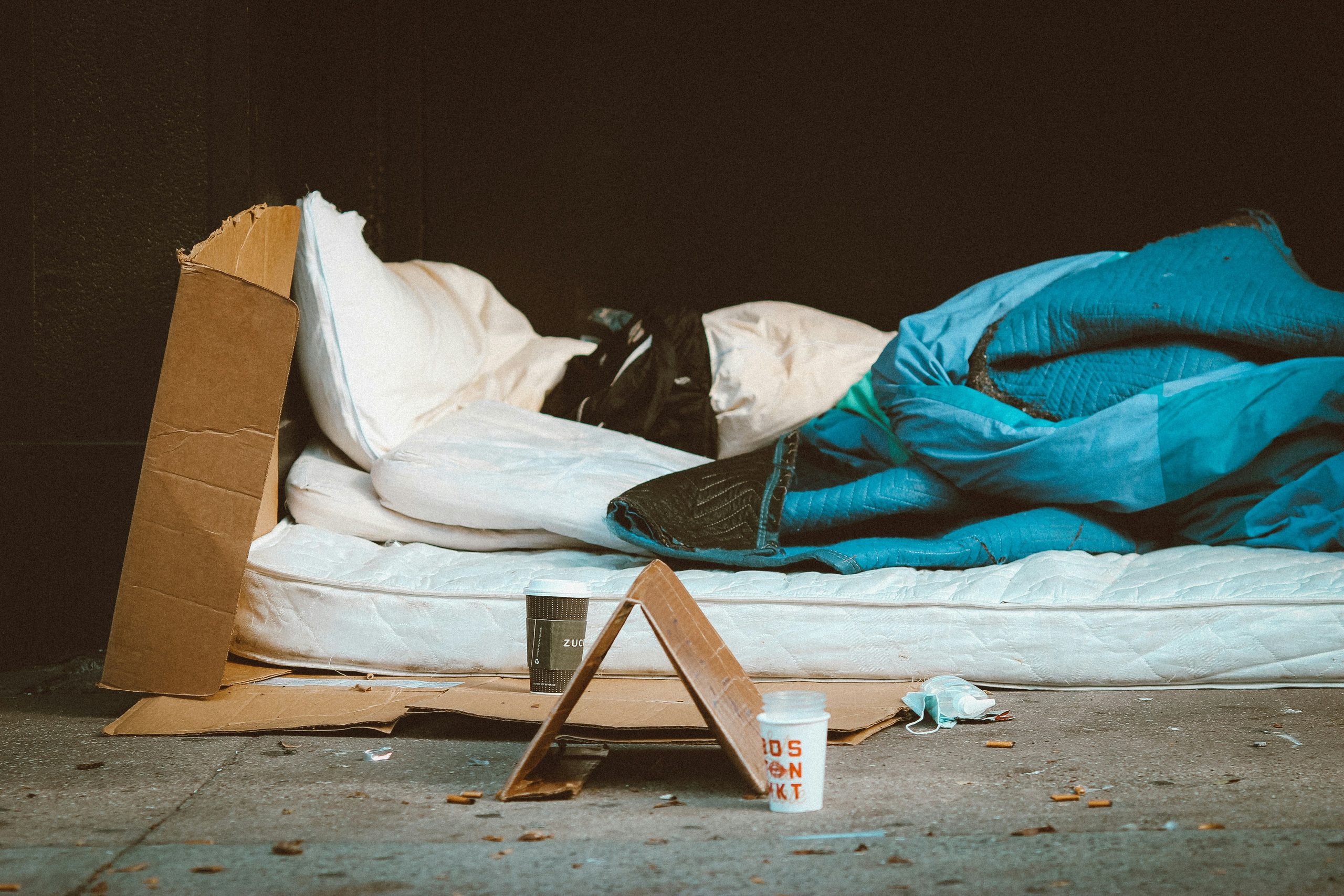
The number of documented attacks targeting people experiencing homelessness across the US more than doubled in 2023 and 2024 compared with the previous two years, according to a new report by the National Coalition for the Homeless.
The findings, released in August, mark the deadliest reporting period in the coalition’s 25-year tracking effort. The coalition identified 197 acts of violence and 127 deaths during the two-year period, compared with 97 incidents and 47 deaths from 2020 through 2022, a three-year period.
While there is a misconception that people experiencing homelessness may be a threat, those who are sleeping on the street can actually often become “victims of opportunity”. Perpetrators may target them due to their vulnerable status and their perceived lack of value to society, according to Donald Whitehead, the coalition’s executive director. He attributes the rise in attacks to divisive political rhetoric around homelessness.
“Words have consequences. And for the last few years we’ve heard a lot of elected officials talk about homelessness in a way that’s dehumanizing,” Whitehead said in an interview.
DC is one of a handful of jurisdictions that explicitly recognize homelessness as a protected category under local hate-crime laws. Federal hate-crime law, however, does not include housing status as a protected category. While Whitehead said that all examples in the report were of housed people attacking people experiencing homelessness, some of the cases listed were violence between people living at an encampment, or violence from an unknown attacker, which would likely not qualify as hate crimes.
None of the deaths included in the data occurred within the District. However, two deaths were reported in nearby Woodbridge, Virginia, and Hagerstown, Maryland. The Woodbridge incident occurred following a dispute between friends over fentanyl pills, according to Inside NOVA. The incident in Maryland occurred when a husband murdered his wife in the park they had been staying in, according to D.C. News Now.
While not included in the most recent data, the District recently saw a high-profile criminal case involving allegations of targeted violence against unhoused people. Gerald Brevard III, 35, is on trial for allegedly shooting three unhoused men in Northeast DC over six days in March 2022, according to D.C. Witness.
Prosecutors allege Brevard deliberately targeted the men because they were homeless. He faces first-degree murder, assault, and weapons charges, with bias-related hate-crime aggravation attached to the violent charges, D.C. Witness reports.
The lack of federal recognition makes it harder to measure the full scope of violence, according to Whitehead. The coalition assembled its report using court records, news reports and accounts from unhoused people, but said that its figures likely undercount attacks.
“We need the Department of Justice to do this. We need them to take a look at this with the enormous amount of resources that they have,” Whitehead said.
According to the report, shootings were the most common form of violence against unhoused people in the US, accounting for 86 incidents, followed by 59 assaults and 28 stabbings. California recorded the most incidents, with 43, while the coalition identified law enforcement officers as perpetrators in 19 cases, resulting in 13 deaths.
Deaths among people experiencing homelessness are an ongoing concern in DC. At least 78 unhoused people died in the District in 2025, according to the People for Fairness Coalition, which holds an annual vigil to remember those who died without housing. In 2023, opioid overdoses accounted for more than half of deaths among unhoused residents, according to D.C. medical examiner data.
Among those whose lives Street Sense has memorialized is Chandra Brown, known as Redbook Mango, a 44-year-old poet and Street Sense vendor whose body was discovered in Northeast DC in October 2024, more than a year after she was reported missing.
Whitehead believes that policies that criminalize sleeping outside and disperse encampments can leave people isolated and vulnerable. In the past two years, 350 cities have passed anti-homelessness laws, according to the ACLU. These bills target those sleeping on the street with arrest or fines without providing alternatives for long-term housing.
“Once you disperse that encampment, people kind of go into isolation, and they hide away,” Whitehead said. “But when they hide away, and they’re in these remote locations, they become more vulnerable.”
Whitehead also called for more standardized death records and urged DC to expand supportive services and homelessness prevention efforts. But for him, the most effective way to protect people from violence is to get them off the streets and into permanent housing.
“Nobody should die alone on the streets of the richest country in the world,” Whitehead said.
Courtesy of Street Sense Media / INSP.ngo