story and photos by Andrew Anderson
The U.S. has the highest incarceration rate of any independent democracy in the world, with a rate of 580 per 100,000 residents, according to a 2026 report by the criminal justice reform nonprofit Prison Policy Initiative. Every year, hundreds of people are released from prison with little or no resources. Many face an uphill battle reintegrating into society. Many of those people released from prison face homelessness and other obstacles such as family reunification, finding a job, going back to school, and staying out of trouble.
I wanted to know more about what the re-entry process is like and to learn about the obstacles faced by returning citizens as they reintegrate back into society and how they can be overcome. I spoke with Rachelle Ellison and Beth Johnson, two formerly incarcerated people who have navigated the trials and tribulations of being returning citizens.
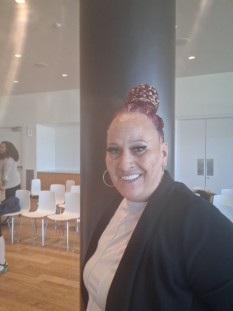
Andrew: When you were released from prison, how did you adjust to your new environment? What was it like for you? How difficult was it for you to find a job, for instance?
Rachelle Ellison: It was very difficult because I had the criminal background, first and foremost. I didn’t have current identification. I didn’t have anything, and I couldn’t get hired. I couldn’t live where I wanted to live because of my criminal background. I was being denied everywhere.
My first step was getting my birth certificate. I was born in Ohio. I had to send away for it, and I went through [nonprofit] Miriam’s Kitchen, which received my birth certificate. That was the first step. Then going to get my Social Security card was the second step, and so this was a lengthy process. It took about 45 to 60 days just for me to get the birth certificate and Social Security card to be able to go get the identification.
Not to mention, I was on parole, so I had to report to a parole officer. I had to take urine tests. I had a curfew, so I was abiding by all the rules and regulations that were set upon me for release, and then trying to fit everything in my day that I needed to do for me to become a productive member of society, which was really hard.
How difficult was it to get housing?
After 17 years of being homeless, my first apartment was still what you would call not exactly where my spirit was, but it was over there in Redwood, like off Bladensburg Road, and it was okay. But I moved the whole homeless family in with me because I thought, “I made it into an apartment. How can I leave them out there?”
I quickly found out that doesn’t work, so then after I was able to move from there, I quickly just said, “Okay, I’m going to do some more education.” I started going to school and graduating, and doing different things: recovery coach academy, and medical office, and getting my associate’s degree, and then I worked on my dual bachelor’s degree. But at this point, I’m moving to higher levels of where I want to live because I want to live where it’s peaceful.
Do you have a final message?
The final message is: I know it’s going to be hard. You’re going to want to give up. Don’t give up, because on this side there’s so much more: so many more blessings, so much more growth, and it’s so much more peaceful.
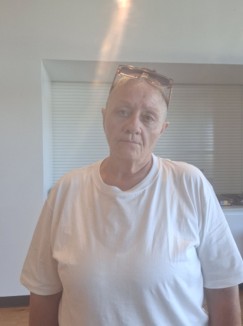
What was it like when you first got released?
Beth Johnson: I was scared because I had been locked up for 10 years, and I still had the mentality that the officers were following me, and I was afraid I was going to fail and go back.
How did you overcome that?
I had to get a therapist, and I had to talk, and I learned that what somebody else says does not define me. That I can do what I set my mind to do. So I started doing that, and that’s what I did. I started, you know, acting like a citizen, and instead of acting like I was still incarcerated, which was hard. It was absolutely hard.
Did you go back to school?
No, I went to school when I was locked up. So I tried stuff. I didn’t want to do college. I had like eight months before I graduated. Just, I didn’t want to do it. I don’t know. It was just hard.
I ended up getting married right after I came off parole. Oh, bad mistake. Bad mistake. I thought I was in love with him, but he was abusive. I had to learn a whole new thing. You know, I finally ran away, and then I ended up in D.C. And when I came here, I ended up in the shelter.
I went backwards for a while. I went backwards for about six years. I ended up back in the shelter. I ended up homeless, and then I got with one of the programs here, and they took me off the street, and I’ve gone forward since. I haven’t stepped backwards.
This is inspirational. Do you have a final message?
Don’t give up. Don’t let nobody judge you. Don’t nobody have no right to judge you but the man upstairs. Don’t let them judge you. And if you fall, don’t stay where you fall at. Get up and get and pick yourself up and keep going. And it’s worth the steps. It’s worth the fight.
Courtesy of Street Sense Media / INSP.ngo