story and photos by Shakema Straker
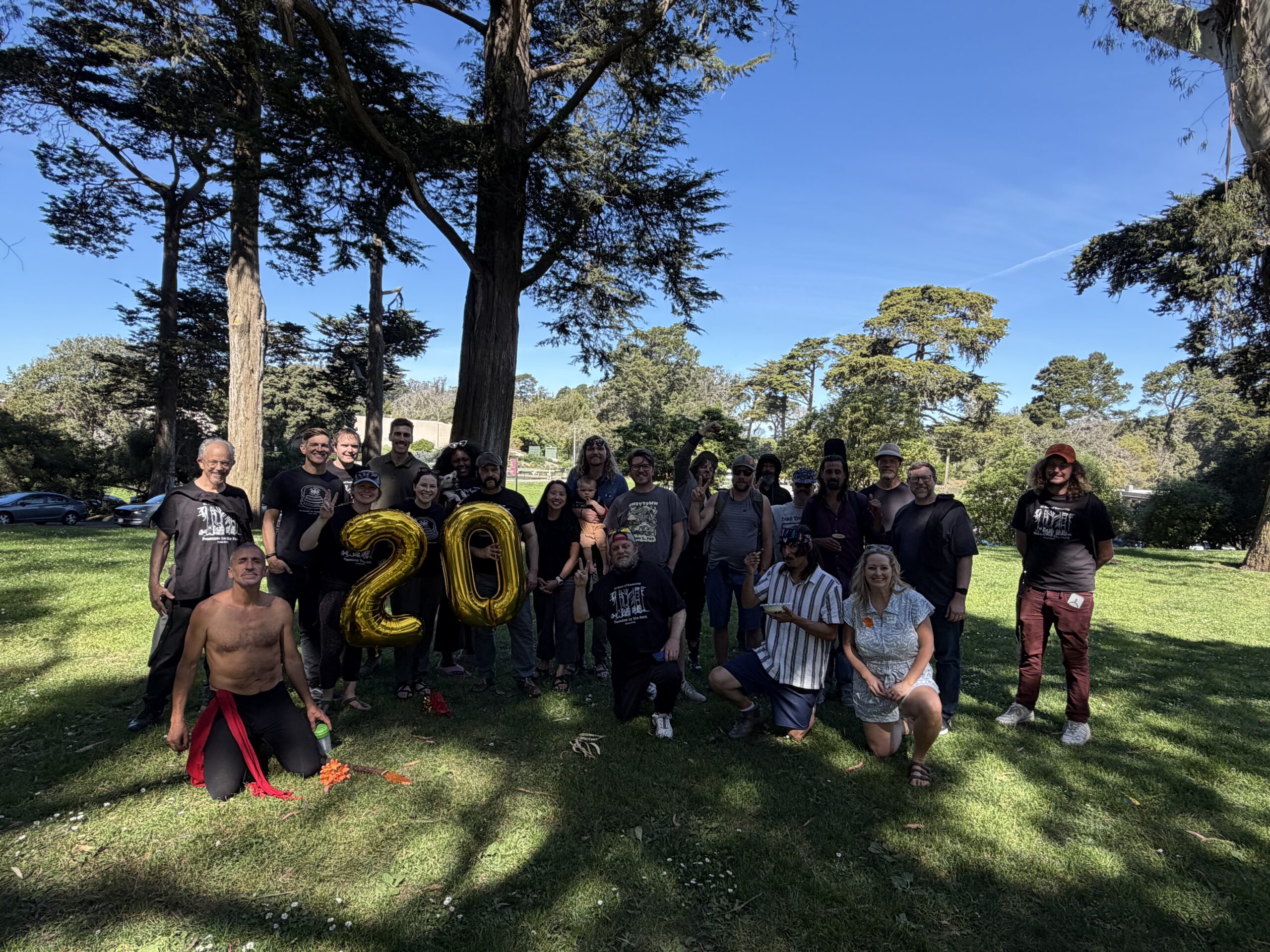
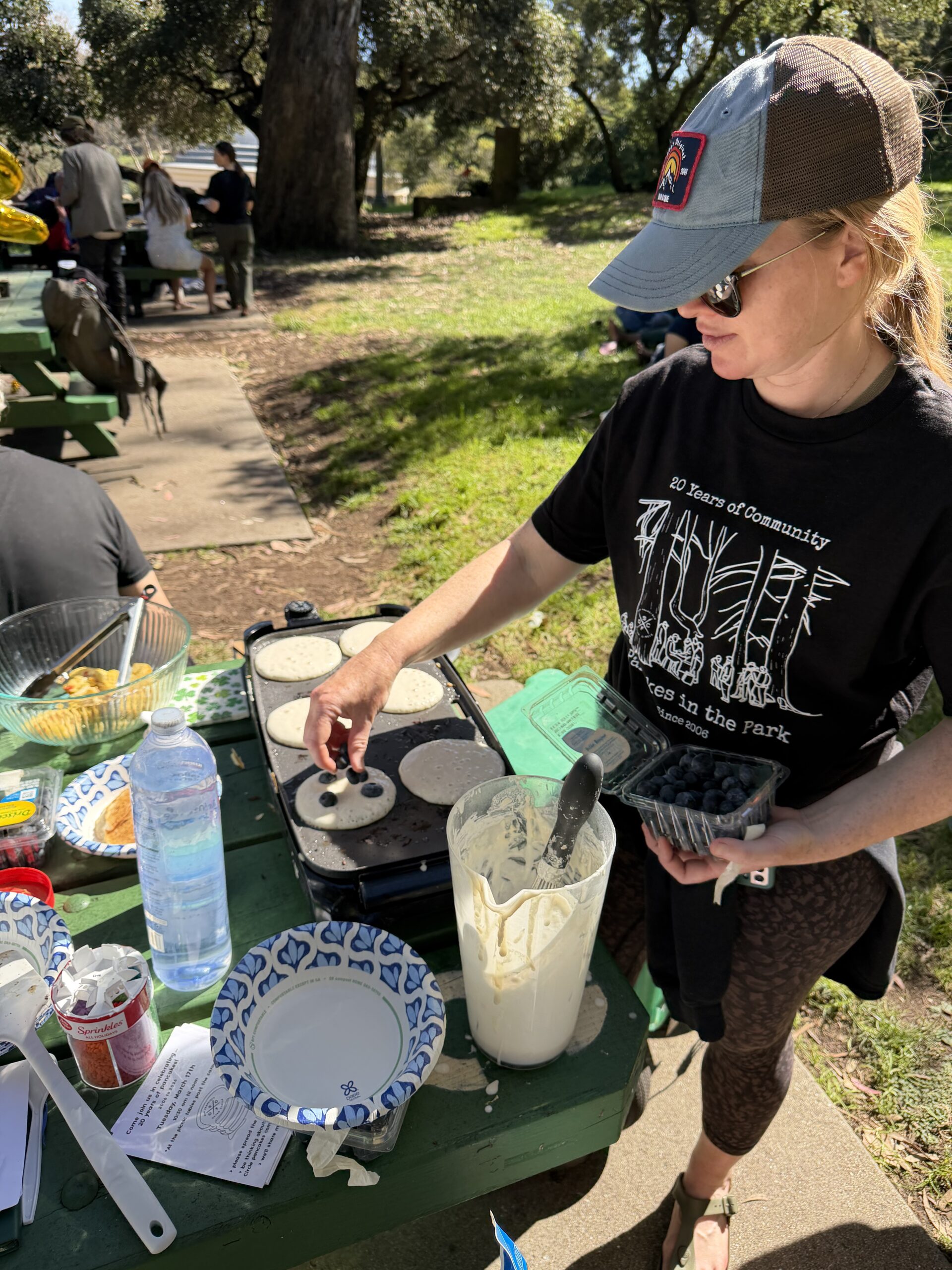
The smell reaches you before anything else. Warm batter on a hot griddle, drifting through the eucalyptus and fog of Golden Gate Park on a Tuesday morning. On March 17, near the Children’s Playground, a small gathering took shape: coffee, plates of quiche, volunteers moving unhurriedly between people who’ve settled in. There is no line, no sign-in sheet. A volunteer comes to you, takes your order, brings your food back. It feels, deliberately, like being welcomed into someone’s home.
This is Pancakes in the Park, a weekly community brunch hosted by the San Francisco Outer Circle (SFOC) in Golden Gate Park. It has been happening every single Tuesday since 2006. Twenty years of showing up without fail, through tech booms, shelter crises and pandemics, through every way this city has remade itself without quite making room for its most vulnerable residents.
The story of how it started is almost disarmingly simple. In 2006, an unhoused neighbor suggested it: cook pancakes in the park. The SFOC, a Christian ministry committed to genuinely knowing their neighbors rather than simply serving them, said yes, showed up the following Tuesday, and never stopped. Word spread until people across the country knew them as “the pancake Christians.” Since 2018, Citizens Church of San Francisco has been facilitating Pancakes in the Park, but its original vision hasn’t changed: to invite the lonely, the outcast, and the wanderer into real community.
Volunteer Georgia Lee has been showing up since 2015. She recalls the story of a regular, who at a recent closing gratitude circle, a small ritual that ends each gathering, gave thanks simply for the fact that this space is always here. Every Tuesday he has a place he can count on for food and socialization.
“In the midst of such a transient city — programs losing funding, things stopping — just going for 20 years rain or shine every week is a big deal,” she said. “People can count on it.”
John Stiefel, another volunteer, came here after working with large international nonprofits for 12 years. He stayed because of what he calls “the power of proximity,” what happens when you stop theorizing about someone’s life and actually sit next to them in it.
“The power of proximity — when we spend time with people that might be different from us in any way — it changes how I see the city,” he said. “It changes how I see our systems. I would love for the folks in this city who have authority to get to know our unhoused San Franciscan friends. To start to see the city through their eyes.”
When asked what he’d want policymakers to understand about what happens here, Stiefel offered these words: “Friendship as health care. Friendship as harm reduction. Friendship as violence reduction.”
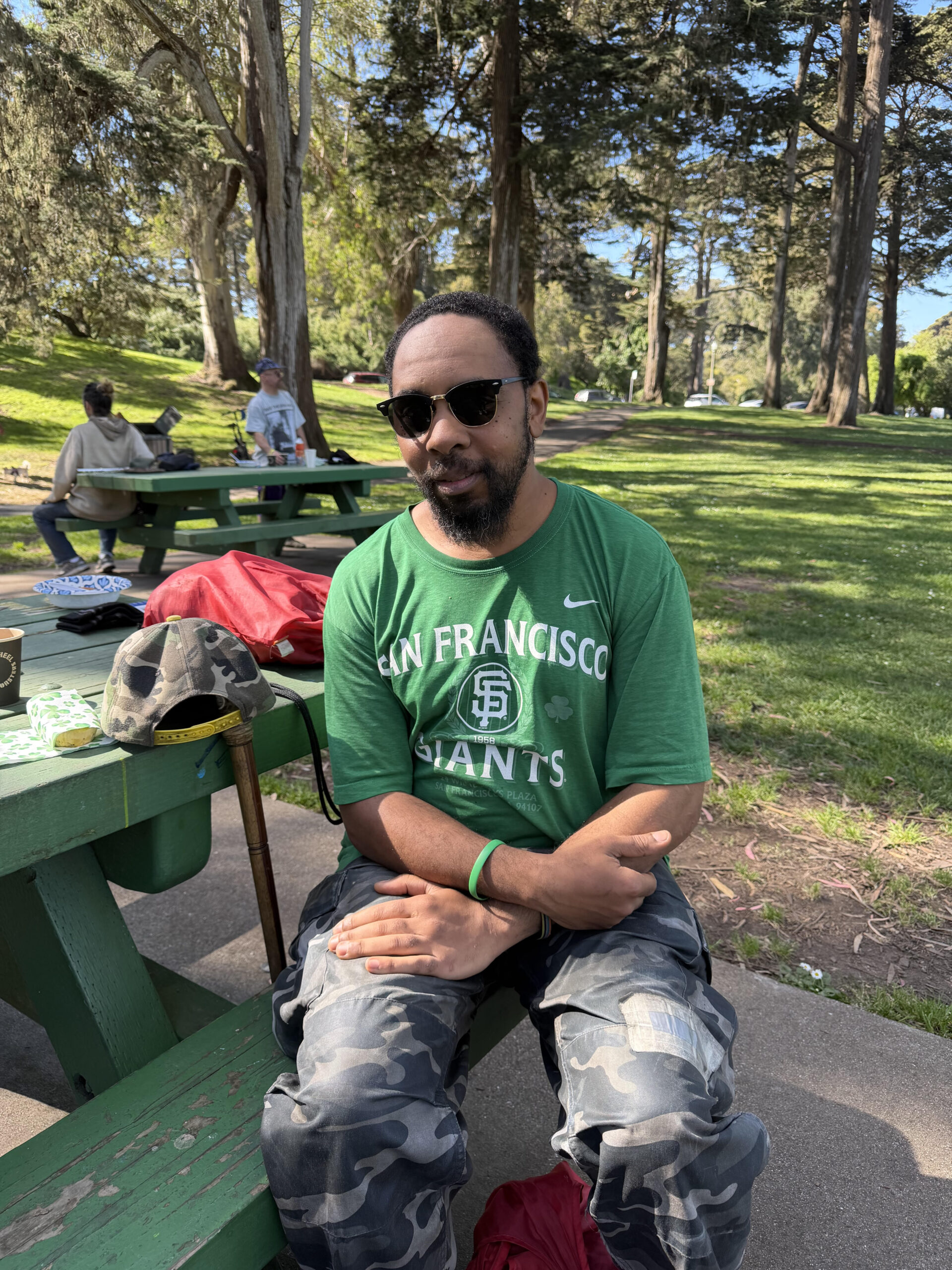
Chris Jones, a Pancakes in the Park regular, has truly experienced what that means. He arrived in San Francisco from Ohio in 2008, finding his way to Golden Gate Park in the hours between shifts.
“I had a lot of experience and time in the Golden Gate Park environment, when I was working while I was homeless…most likely to try to find myself in a natural environment,” Jones said.
Through a drum circle in Golden Gate Park, Jones found community, and through community he found Pancakes in the Park. He is housed now, though he knows what most people who have experienced homelessness know: A set of keys doesn’t necessarily undo the challenges, economic instability and isolation that accumulate over years of surviving without stable shelter. He still comes every Tuesday, drawn by the same two things that brought him to this park in the first place: Community and the quiet of being somewhere green and open.
Twenty years is a long time for anything to survive in San Francisco. We’ve watched programs fold, neighborhoods lose the people and businesses that gave them soul. And still, every Tuesday, the table is set for whoever walks into the park that morning needing a meal and someone genuinely glad to see them. In a city that has never quite been able to agree on how to treat its unhoused residents, Pancakes in the Park has quietly refused to wait for an answer. Showing up, every week, with food and without an agenda is its own kind of radical act.