
The average San Franciscan that goes to or contacts City Hall can access 152 boards and commissions and give input on how the City operates. Some of these bodies make decisions for City departments, like the Police Commission or the Rent Board. Others perform as advisory committees, such as the Youth Commission.
Unhoused San Francisco residents have five specific bodies addressing their issues, which provide these constituents much-needed accountability, according to homeless advocates. But now, these homeless-serving bodies are at risk of being altered or eliminated.
Those were among the recommendations that the Streamlining Commission Task Force made in a report to the Board of Supervisors earlier this month.
The task force said that these panels—the Homelessness Oversight Commission; the Our City, Our Home Oversight (OCOH) Committee; the Shelter Grievance Advisory Committee; the Shelter Monitoring Committee; and the Local Homeless Coordinating Board—should make way for a leaner, more efficient city government, which would be decided through either a Board of Supervisors ordinance or a measure on this November’s ballot.
The task force itself is a product of a ballot measure from 2024, Proposition E—which requires the City to look into reducing the number of commissions—as well as public input. It defeated a competing measure that sought a similar objective, but would have increased the mayor’s power to appoint commission members.
Ironically, this could still happen if Mayor Daniel Lurie’s allies on the Board of Supervisors take up the task force’s recommendations when it hears them in April. The board could draft a City ordinance to remove the “oversight” from the Homeless Oversight Committee and turn it into a mere advisory board, stripping its power to budget itself and approve contracts. Additionally, the Oversight Committee could be forced to absorb the Local Homeless Coordinating Board into a subcommittee.
This proposed reduction of commissions from 152 to 86 would fit in with Lurie’s larger scheme to redraft the City charter and shift power to the executive branch—an unsettling move in a climate where Donald Trump aspires to do the same on a national scale with executive orders and other unilateral actions.
As for the three other panels, the task force’s recommendations could signal doom: It suggested elimination of the OCOH, Monitoring and Grievance committees. Because OCOH was created through a ballot measure in 2018, by City law it could only be repealed similarly. Grievance and Monitoring were formed after Supervisors passed ordinances in 2004 and 2022, respectively, and it would take a Supervisors’ vote to undo them. Whether done electorally or legislatively, this would continue a decades-long political tradition of seizing homelessness as a wedge issue and promising voters to remove homeless people, their tents and their vehicles from sight.
If these committees are combined or abolished, their functions would then be assigned to other bodies or City staff. Jennifer Friedenbach, executive director of the Coalition on Homelessness, predicts that would result in an increased workload that would overwhelm City employees. In a December 12, 2025 letter to the task force, she wrote, “Removing these bodies and combining them into one body would concentrate a mountain of work on individuals who would be forced to drop many of the functions.”
In making local government more productive, the task force is losing sight of the imperative of allowing the public—including unhoused constituents—to have a role in knowing how it’s served, Friedenbach added.
“We continue to be concerned that this body is thinking in terms of ‘efficiencies’ absent the true consideration of oversight, accountability, community power and inhibiting the ability of movements in San Francisco to effect social change by concentrating blind decision making in the executive branch,” she said.
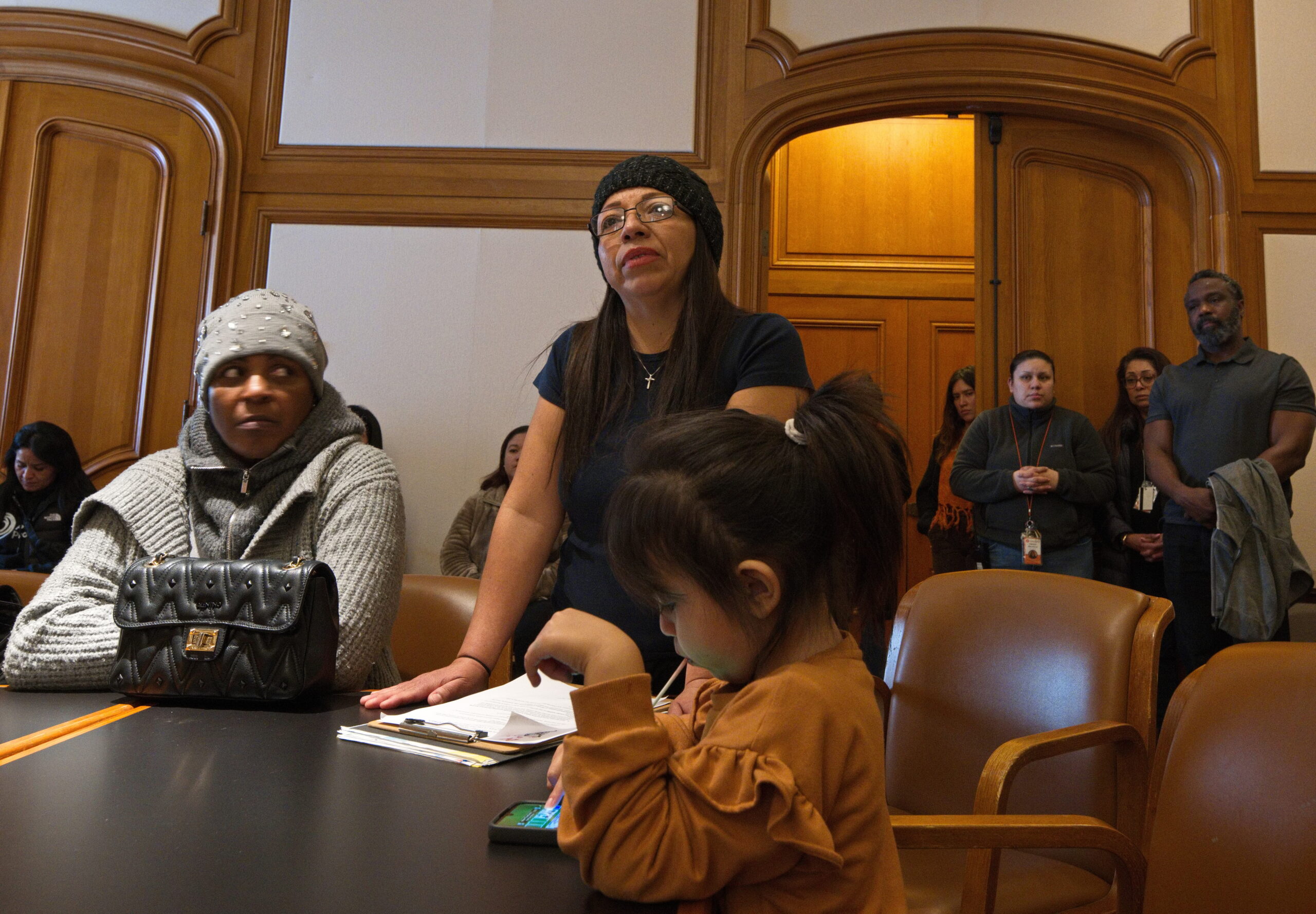
At the January 14 Streamlining Commission meeting, representatives from the homeless community weighed in before the panel on the potential impacts of shrinking the homelessness bodies, particularly the Shelter Monitoring Committee.
Colleen McCarthy, a San Francisco State University social work student who worked with the shelter system, said that homeless people avoid shelters because they lose their autonomy upon entry, something she says is confirmed in peer-reviewed academic journals. She also noted that the Homelessness Department’s auditing process has no way of tracking where people go once they exit the shelters.
McCarthy added that shelter clients are aware of the Monitoring Committee overseeing shelter conditions and staffing. By eliminating that committee, “There will be no outlet for them to have their voices heard, and fewer people will stay at the shelters,” she said.
Monitoring Committee member Isaac Langford, who also works as a client advocate who defends evicted shelter residents, issued a statement through a representative of the Coalition on Homelessness on how his committee acts as an important check on the system.
“An independent Shelter Monitoring Committee strengthens the system and protects its residents,” he said. “Removing that independence reduces transparency and erodes public confidence. Streamlining should not come at the cost of accountability.”
The Commission Streamlining Task Force issued a report last month that recommended San Francisco City government reduce its number of boards and commissions from 152 to 86. Among these reductions are the five bodies focused on the City’s response to homelessness. If the City acts on the task force’s proposals, these bodies might be combined with other City departments or cut altogether. Here are the panels whose fates might be decided by City lawmakers or voters.
Homelessness Oversight Commission. Established in 2022 when voters passed Proposition B, this panel oversees the Department of Homelessness and Supportive Housing. Its seven members are split between four mayoral appointees and three from the Board of Supervisors, all of whom serve four-year terms and may be dismissed at will. The task force suggested keeping the commission but changing its powers from policymaking to advisory. The mayor and the board may appoint one person apiece who has personally experienced homelessness. For the remaining five members, the task force proposed broadening the language of the eligibility requirements to include those in “relevant organizations or projects serving one or more homeless subpopulations,” though it didn’t clarify which ones. Its suggestion to have these representatives be involved in temporary shelter, housing and prevention sounds less of a “must” and more of a “nice to have.” Because the commission was created by a ballot measure, it could only be changed by one, which is what the task force recommends as a next step.
Local Homelessness Coordinating Board. This body advises the Homelessness Oversight Commission on issues related to the City’s participation in the federal government’s homelessness response. The board seats 11 people, with at least one member who is a currently or formerly homeless person. The task force recommended keeping the board as an advisory body, but only by merging it with the Homelessness Oversight Commission. That could only take effect if the Supervisors pass an ordinance, according to the task force.
Our City, Our Home Oversight Committee. This committee oversees funds for homeless services collected under Proposition C, which passed in November 2018, and began meeting in September 2020 after overcoming a legal challenge. Claiming that OCOH’s functions already overlap with those of City staff and other bodies, the task force recommended eliminating the panel and removing it from Administrative Code’s jurisdiction through a ballot measure.
Shelter Grievance Advisory Committee. This panel of 13 members, established by a board ordinance in 2022, exists to hear appeals from shelter clients who have been evicted for nonviolent violations or health and safety reasons. The Grievance Committee provides shelter client advocates to defend them in hearings, and if necessary, an “independent volunteer arbiter” that the City hires. It also reports shelter eviction data. The task force said this committee has “outlived its useful purpose” due to the formation of the Homelessness Oversight Commission, thus recommending a City ordinance to remove the committee and transfer its functions to City staff or other bodies.
Shelter Monitoring Committee. Formed in 2004, this committee is charged with inspecting shelters for compliance with a 2008 law regarding shelter conditions and staff treatment towards clients. The task force credited this 12-member body for being “instrumental in pushing the City to provide appropriate standards of care and oversight.” In addition to shelters, it also monitors shelters’ contracts with the City. But using the same words about the Grievance Committee, the task force said the Monitoring Committee “may have outlived its useful purpose.” As with the Grievance Committee, the task force also recommended that the City pass an ordinance to eliminate this panel and assign City staff oversight of shelter conditions.