by Colleen McCarthy
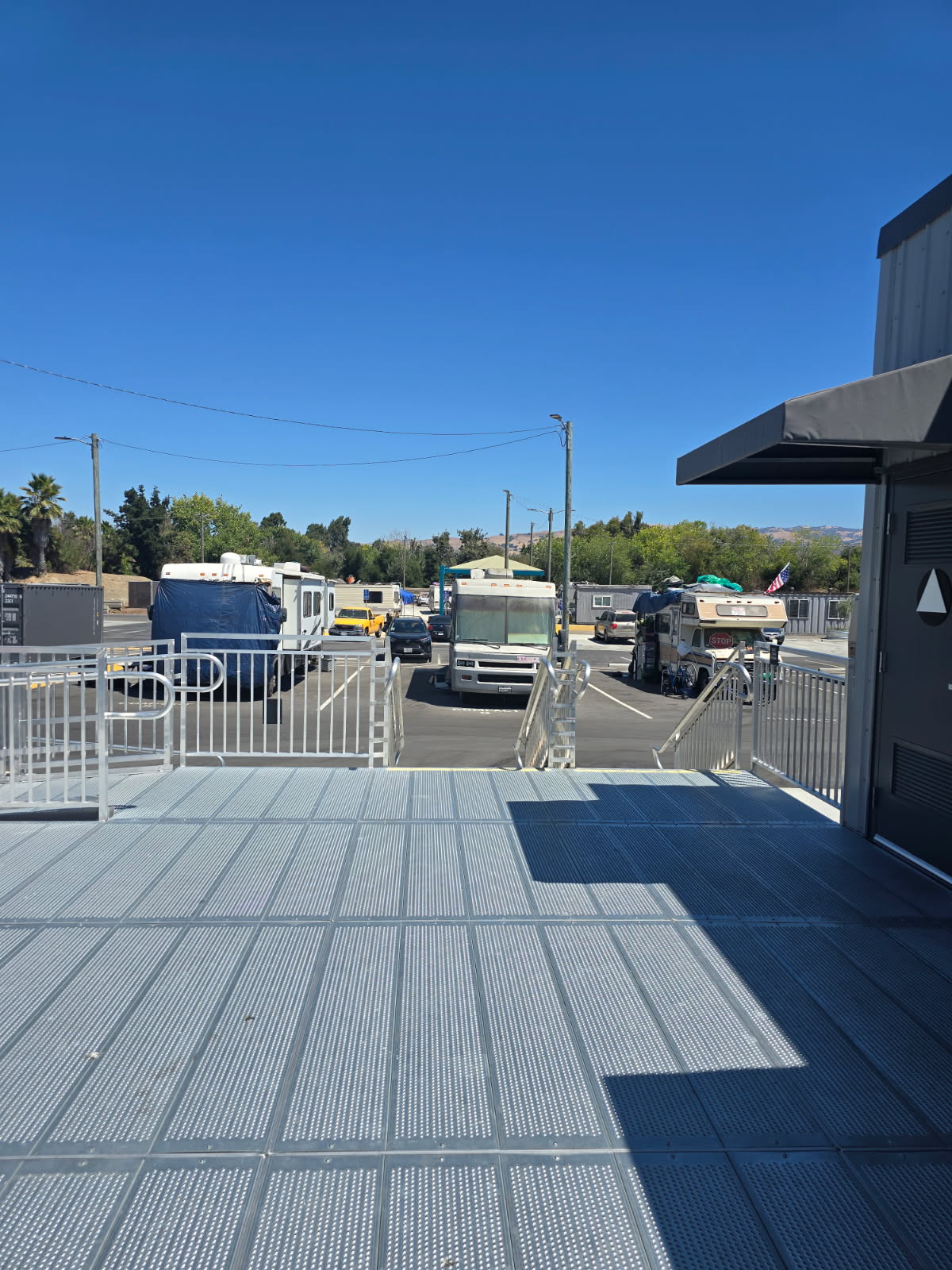
The first Safe Parking Program in the United States was pioneered in Santa Barbara in 2004 by a group of activists and is now run by New Beginnings (Lewis et al., 2024; Ray Ivey & Gilleland, 2018). Safe parking is usually designed to offer a transitional space for car and RV residents to park at night (and sometimes 24/7) to avoid parking regulations and offer a safe location with access to basic services like water, showers, and sanitation (McElwain et al., 2021). Programs are run by municipalities, organizations with various sources of funding, faith-based organizations, or a combination of the three. Safe parking legislation passed the California State Senate and Assembly in 2019 requiring larger cities to offer some sort of safe parking, only to be vetoed by Gov. Gavin Newsom (McElwain et al., 2021). San Francisco offered two safe parking programs, but they existed only for a short time, and no future safe parking is planned at this time. However, the literature shows that safe parking programs are succeeding across California and the West Coast.
Researchers across disciplines have shown that safe parking programs can be successful and have offered best practices for safe parking programs. Researchers from the Urban Studies and Planning Department of the University of California, San Diego sought to evaluate one of the largest safe parking programs to start addressing a data deficit. The mixed-methods study collected data from 349 current and past clients, as well as staff of the Jewish Family Service of San Diego Safe Parking Program, over three years. It found that 40% of participants in the program during the study exited to housing, twice the proportion of exits to housing from emergency shelters in the Continuum of Care in that area. In comparison, San Francisco’s own assessment of its exits from emergency shelters in early 2025 indicated that only 13% of participants exited to permanent housing.
The researchers found that the safe parking program significantly relieved the overriding safety concerns parkers stated when they parked on public streets. Participants also noted that safe parking was safer than shelters (Lewis et al., 2024). The program offered a place for them to rest and stabilize in a secure location so they could get back into housing. The University of Southern California Sol Price School of Public Policy’s “Smart Practices for Safe Parking” report found 43 programs for safe parking across the country through their comprehensive look at programs in the U.S. Although they mentioned that most of the programs evaluated in the research did not allow RVs because of space constraints and maintenance needs, the takeaways from the research could still apply to safe parking for RV residents, given the right location.
Services provided by the programs varied, with some offering a range of hygiene, household and case management services, and others simply offering a place to sleep. Based on surveys, more than 50% of the programs provided portable toilets or indoor restrooms, wi-fi, food, showers, charging stations, financial help for vehicle issues and housing placement services. The researchers indicated that an understanding of the unique characteristics of people living in vehicles should be used to design safe parking programs, locate the program and offer case management. The writers also said that programs should expect and work toward about 30% to 40% rehousing in 60 days. Researchers from Seattle University School of Law’s Homeless Advocacy Project evaluated case studies of New Beginnings Counseling Center’s Safe Parking Program in Santa Barbara, California; Dreams for Change’s safe parking program in San Diego, California; and Lake Washington United Methodist Church’s safe parking program in Kirkland, Washington. They documented how careful planning could ensure that lots located around cities could exist harmoniously with residential and industrial neighbors.
Lewis, L. R., Rabinowitz Bussell, M., & Livingstone, S. (2024). An analysis of safe parking programs: Identifying program features and outcomes of an emerging homelessness intervention. Housing Policy Debate, 1–28. https://doi.org/10.1080/10511482.2024.2313511
McElwain, L., Schiele, D., & Waheed, L. (2021). Smart practices for safe parking: A nationwide review of safe parking programs for people sheltering in vehicles. University of Southern California Sol Price School of Public Policy & The Center for Homeless Inquiries. https://priceschool.usc.edu/wp-content/uploads/2021/06/Smart-Practices-for-Safe-Parking-USC-2021.pdf
Ray Ivey, T., & Gilleland, J. L. (2018). Hidden in plain sight: Finding safe parking for vehicle residents. Seattle University School of Law Homeless Rights Advocacy Project. https://download.ssrn.com/18/05/03/ssrn_id3173221_code1572922.pdf