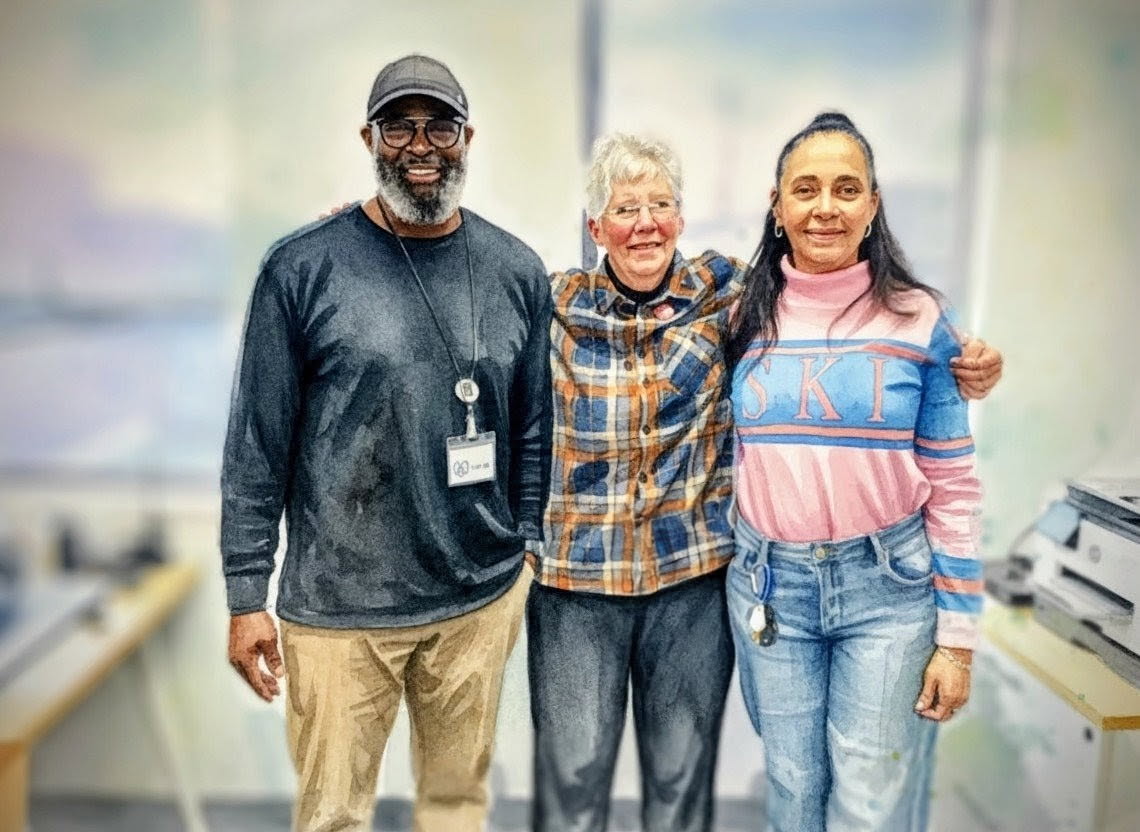
by Armando Martinez, Flo Kelly, and Colleen McCarthy
What happens when you are called to a ministry? You follow the way of love, compassion, and empathy without constraints of time and expense, finding peace and satisfaction in helping someone else get through the day—pure selflessness. On the other hand, a new job, no matter how committed you might be to the issue or sector, quickly becomes another workaday nonprofit position with an emphasis on productivity, complete with lunch and coffee breaks designed to boost output even more.
For people who work at WeHOPE (We Help Other People Excel), founded by Pastor Paul Bains and his wife Cheryl Bains, it is more of a calling; not a 9-to-5 job. It is therefore not surprising that in San Jose, WeHOPE has created a safe space for people who are otherwise forbidden to occupy any space. Meanwhile, agencies serving unhoused people in San Francisco face built-in bureaucratic rules and regulations that limit the impact, ability and outcomes of their work. For example, WeHOPE, which operates the safe parking RV site in San Jose, also runs the Monarch Hotel and Jerrold Commons in San Francisco. WeHOPE is subject to a different set of rules in each city; San Francisco has far more restrictive rules than others.
Sometimes the nonprofits put in charge of shelters and other transitional housing, like the Candlestick Vehicle Triage Center (VTC) in San Francisco, have their own set of restrictions on generator use, cooking and a no-visitors policy that excludes even friends or family.
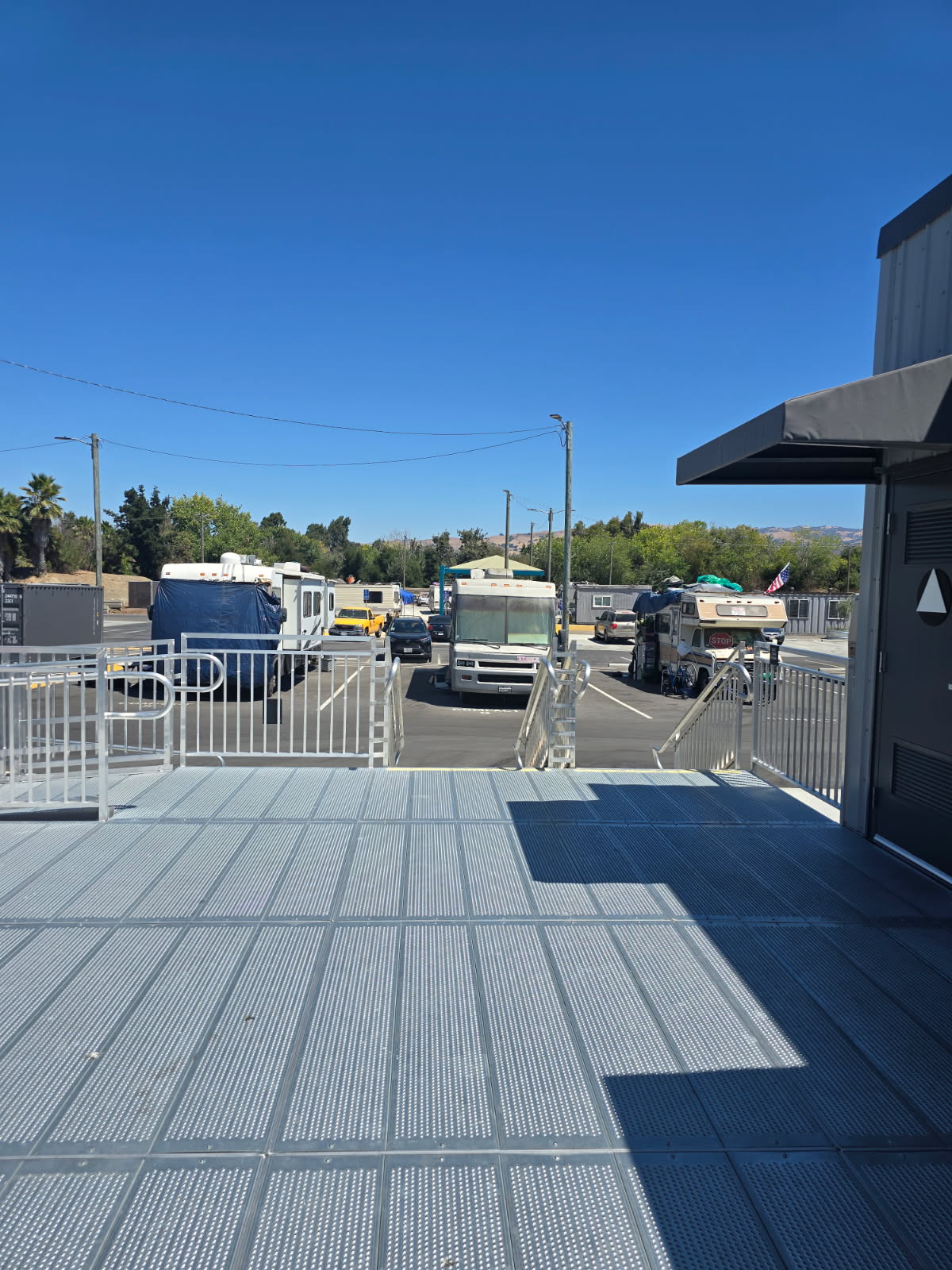
After experiencing the closed-off, restrictive and unwelcoming environment of the Candlestick VTC in January 2022, we authors were unexpectedly overjoyed when we made an unannounced visit to San Jose’s Berryessa safe RV parking site three years later. The site director, Leonard Stevenson, immediately offered us a guided tour in his golf cart. We were amazed with the comfortable living conditions, including a laundry room with 17 washing machines and dryers including a separate machine for pet blankets, etc.; six shower/toilet combinations; a community garden with herbs and peppers that residents plant and eat; and even a fenced-off pet play area.
Each RV has about 10 yards of space around it with no physical separations between vehicles—a stark contrast to the Triage Center, which eventually fenced in each individual RV.
Significant differences include the Candlestick VTC barring residents from using generators 24 hours for heat and electricity, as well as using propane for cooking meals to meet the residents’ medical needs. Part of the issue is that a neighborhood group sued the City for the use of generators after PG&E took years to electrify the space. PG&E claimed that the City missed a key application date, but the City countered that PG&E deprioritized the site.
The site had been afforded a huge operating budget and staff to accommodate 120 RVs. When it was not electrified, the City limited the site to no more than 40 RVs, but did not adjust the budget. The final cost was roughly $140,000 per RV per year. They could have easily gotten creative and equipped RVs with solar, which starts $300 per RV, and gotten volunteers from the community to install the panels, but nothing about the RV site was creative.
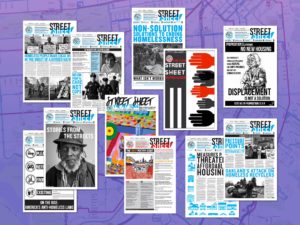
At some point, RV residents’ efforts to form community oversight and inclusion of setting of rules were stymied, although it’s unclear if it was by City workers or Urban Alchemy staff who were contracted to provide security. Volunteers from the community who had been providing RV residents with clothing, food and other care were banished. Visitors were also barred from the site. Among those prohibited from visiting the VTC were staff and volunteers from the Coalition on Homelessness—the homeless advocacy organization that publishes Street Sheet—dampening any contact with residents.
These contrasting environments produce vastly different results. Berryessa’s welcoming atmosphere builds relationships that “due to people feeling cared for and being treated like they really could be successful in housing, and eventually feeling comfortable contemplating a different life scenario,” according to Victoria Garibaldi, program manager at Berryessa. This is crucial to the success of any transitional housing
program. The trust and understanding built between residents, their case managers, and staff creates the stabilization necessary for the transition to permanent housing.
By August 2025, after four months of operation, WeHOPE’s Berryessa safe parking site had housed 23 people and found jobs for 15—some at Goodwill—far surpassing the city of San Jose’s established metric of success, which was to house two people per quarter of the year.
While San Jose appears more successful at creating space for RV safe parking and housing RV dwellers than San Francisco, it remains to be seen how successful San Francisco’s Large Vehicle Refuge Permit Program (LVRP)—a product of the City’s recently enacted RV ban—will be at housing RV dwellers in San Francisco and improving their financial outlook.

San Francisco’s program consists of three parts: RV buybacks, provision of housing, and permits that can be revoked for violations and without which folks are subject to a two-hour time limit on all city streets. The buyback program offers residents to sell their vehicle at $175 per linear foot, paid in two installments: $1,000 up front, and the remainder upon acceptance of housing.
But that housing offer remains a murky area. Housing subsidies for RV dwellers are funded for only two years, despite being typically offered to any other unhoused person for up to five years. We have no solid indication as to how long residents will be economically supported in their new homes. As of January 27, 76 RVs have been towed for the two-hour violation and 308 have been ticketed, while only 323 vehicular households have been given permits. Of those permitted, only seven have been housed.
Both cities’ efforts are ultimately focused on making RVs “disappear,” influenced by wealthy elites. And yet, an overview of the existing data and research on safe parking sites show that well designed safe-parking programs across the U.S. and California can be highly successful with housing exit rates far surpassing San Francisco’s traditional emergency shelters.
The first City-sponsored safe parking site in San Francisco was a temporary site on unused Balboa Park BART station land. That site ran for a year and a half from late 2019 to March 2021, then closed to make space for affordable housing. It sheltered up to 29 vehicles and was considered successful. While Urban Alchemy provided security, there were few complaints from people parking there, and only eight households transitioned into housing. At a price tag of about $62,000 per spot, the program included showers, bathrooms and case management, but also extensive security that seemed more about appeasing neighbors than actual need.
In 2022, San Francisco opened its second vehicle triage center in the Bayview District. It was meant to hold about 120 vehicles.The story of this site goes back to a flood that occurred on a desolate road near the defunct Candlestick Park. RVs parked there got stuck and many were inoperable from water damage. Many community members brought food and clothing out to the stranded people. The City then opened up a temporary site and towed the RVs there. Mutual aid groups continued providing support but the City never accepted input from the RV residents on how it all should be set up. The City found a new site, and notified the folks on this lot that they would lose their vehicles unless they moved them to the new site. That was unfortunate considering most of the vehicles were inoperable. It started things out on the wrong foot and went downhill from there.
After pressure from the Coalition on Homelessness, the City towed the RVs to what became the Bayview Vehicle Triage Center. Again, it put Urban Alchemy in charge of security. They fenced the RVs in and kept everyone else out, including mutual aid. Residents were left with very little help as they were provided with no dry clothing or any heat after weeks of heavy rainfall. Relations grew tense after an Urban Alchemy staff person assaulted one of the residents. The Coalition on Homelessness asked for and got a meeting with Urban Alchemy staff and residents. The staff person who committed the assault was asked by his supervisor to publicly apologize. He did, and that apparently was the extent of the action taken, given that he continued to work on site.
Soon, the meetings with the Coalition on Homelessness came to a halt, and we were not allowed on site. Urban Alchemy never took our advice of empowering residents to have a role in overseeing the operation. It was run like any other emergency shelter with very restrictive rules that were constantly changing, and was never set up to line up with the independent culture of RV residents. Eventually, the City closed the site. A new site at Jerrold Commons was supposed to have parking for RV residents run by WeHOPE, but Mayor Daniel Lurie had other plans with his citywide RV ban.
The RV permit program has been an unmitigated disaster, contrary to what smooth-talking public officials say. The City started with a vehicle count in March 2025, but the Coalition on Homelessness estimates that the City missed 1 in 5 RVs during its abbreviated census. It then set up meetings at hard-to-access spots where people had to come and get the permit, but unlike any normal City operation, it made no office available. The appeals process for residents who were missed in the count was swiftly ended with little notice, even before the City acknowledged its undercounting of RVs. The City held one final meeting last November to issue permits—after the permit process was closed.
Now the City is towing like crazy and spending tons of money to do it.